What a backlink is (and why a bad one is worse than none)
You just hired SEO and they mention «backlinks». What they are in plain terms, why they matter, what makes a link good or bad, and why buying them can cost you.
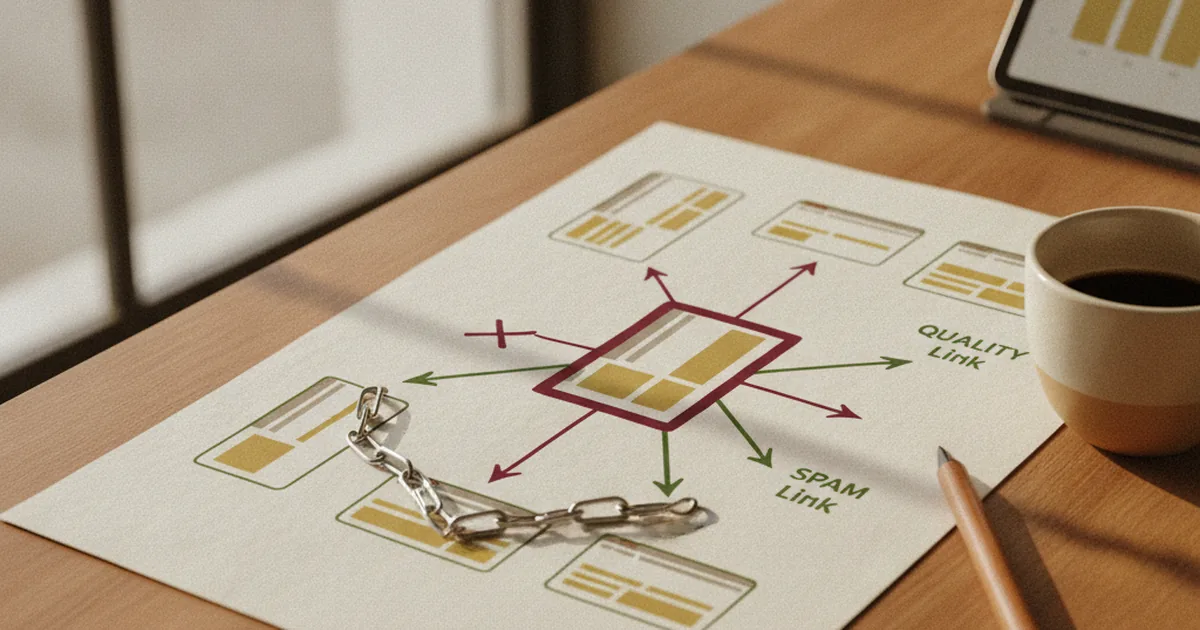
If you've just hired someone for your SEO, at some point they're going to drop the word «backlinks». And like most jargon in this industry, they'll say it assuming you already know what it means. Here's what it means in plain terms, so you actually know what they're talking about and why it matters.
And there's something else — something most people won't tell you upfront: a bad backlink doesn't just «not help». It actively hurts. Getting the wrong link can cost you more than having no links at all.
What a backlink is, in one sentence
A backlink is a link from another website pointing to yours. If a local newspaper blog writes about your business and links to your site, that's a backlink. If a business directory lists you with a link, same thing.
For Google, each backlink is a kind of endorsement. It works a lot like word of mouth: if reputable websites link to yours, Google infers you have something worth paying attention to, and takes you more seriously. It's one of the longstanding factors behind why one website ranks above another.
Why they matter (and why they're not all equal)
Here's where a lot of people go wrong: they assume backlinks are a numbers game. «The more links, the better.» Not true. It's about quality. A single link from a respected site in your field is worth more than a hundred links from junk sites.
What makes a backlink actually count:
- Relevance. A link from a website in your same industry carries far more weight than one from a site with no connection to what you do. A renovation blog linking to a plumber makes sense; a gambling site doing the same makes none.
- Authority. The site linking to you needs to have its own credibility. A well-known local news outlet carries more weight than a blog no one reads.
- Naturalness. The link should appear because it makes sense, not because it was forced in. Google has gotten increasingly good at telling the difference between organic and manufactured.
Why a bad backlink is worse than none
This is the part almost no one explains before selling you a «link package».
Google has been penalising artificial links for years: bought links, links from networks built purely to pass links (known as PBNs — private blog networks), links from spam sites, links that appear hundreds of times with identical anchor text. When Google detects a pattern like that pointing at your site, it doesn't just ignore those links — it can penalise you, and you drop in the rankings.
The tricky part is you don't always control who links to you. But you do control who you pay. And that's where the real danger is. There are services selling «1,000 backlinks for €50». That's not link building — that's buying yourself a problem. Those junk links can take down a site that was doing fine.
Simple rule: if someone is offering you lots of links, cheap and fast, walk away. Good links are none of those three things.
How to earn good ones (without shortcuts)
The backlinks that actually help are earned, not purchased. For a small business, the honest paths are:
- Create something worth linking to. Useful content, a practical tool, a local statistic. If you add value, people link naturally.
- Local press and media. A mention of your business in a local paper is an excellent backlink and, as a bonus, reaches potential customers directly.
- Legitimate directories. Your listing in credible sector-specific or local directories (not link farms). This ties into having a solid local presence, which I cover in the SEO local guide.
- Real partnerships. Suppliers, trade associations, professional bodies, other businesses you actually work with. Links that exist because the relationship exists.
It's slower than buying, yes. But it's what holds up over time and doesn't blow up in your face.
What to take away from this
You don't need to become a link-building expert. Understanding this much is enough to avoid being misled:
- A backlink is a link from another site to yours, and Google reads it as an endorsement.
- Quality matters, not quantity.
- Junk links can get you penalised: one bad link is worse than none.
- If someone is selling you lots of links, cheap and fast, they're putting your site at risk.
With that, when your SEO consultant talks about backlinks, you'll know whether they're building something solid or selling you smoke.
Frequently asked questions
What exactly is a backlink?
It's a link from another web page pointing to yours. For Google it functions as an endorsement: if trustworthy sites link to you, it interprets that as a signal of relevance and ranks you higher. Not all backlinks carry the same weight — what matters is where the link comes from.
How many backlinks do I need to rank?
It's not about the number. A handful of links from relevant, authoritative sites is worth more than hundreds of low-quality ones. Chasing volume is precisely the mistake that leads people to buy junk links that end up getting them penalised. Fewer and better is always the right call.
Can I buy backlinks?
Technically yes, but you shouldn't. Google penalises paid or artificial links when it detects them — and it's getting better at detecting them. «1,000 links for cheap» is the fastest way to create a serious problem for yourself. The links that help are earned, not bought.
Can a bad backlink actually hurt my site?
Yes. Links from spam sites, artificial link networks, or paid schemes can cause Google to penalise your site, and you lose rankings as a result. That's why a bad link is worse than no link at all: it doesn't just fail to help — it actively works against you.
If you're not sure what links are pointing to your site — or you suspect someone sold you junk links in the past — that's exactly what an SEO audit covers. I look at your link profile and tell you what's helping, what's doing nothing, and whether there's anything worth cleaning up.